

Providing an end-to-end solution for the supply chain actors by helping them to manage the quality standards of the fresh products they provide to their customers.
01. The problem
When it comes to solving complex problems, alignment must be at the center of any strategy.
In this case, the starting point was to understand the overall quality assurance process that occurs within a facility and anything that needs to happen before and after a fresh product arrives to the warehouse.
This process is highly technical and involves multiple actors within the supply chain. With that on mind I needed to develop a UX Roadmap for the team, so we would be able to build a useful product (taking in count the point of view of each member from our multidisciplinary team, from stakeholders to technical specialists).
When we finished the definition of the product goals, I started to develop our User Research Plan for ethnographic interviews targeted to each user segment. Some of the goals that came up from those interviews were as follows:
- Improving the time efficacy of the current food inspection process
- Making information management easier for inspectors
- Providing a way to get data reports for decision making
- Improving the way our users communicate and share information at any stage of the process
- Providing an easier way to start disputes when needed in the inspection process
When user research was done, we started to analyze the provided data to map out how the current inspection experience was for our users in order to translate that experience into a mobile app.
02. The solution
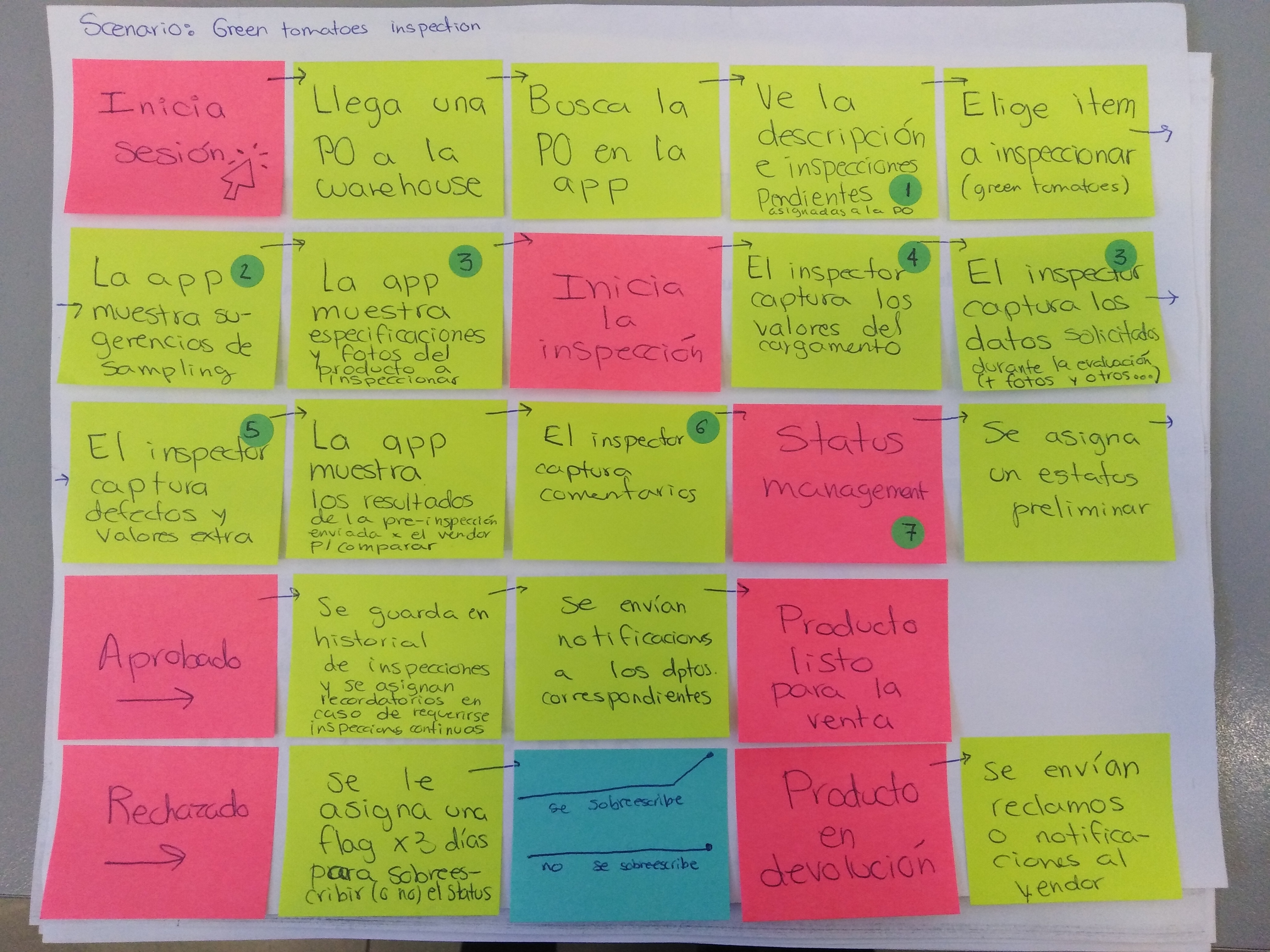
It was time to translate our insights into a tangible solution. Time was less available than ever in any other project at Azzule , so I decided to propose running workshops to get things done as a team, and as soon as possible.
Whiteboards were on place, and everybody had their stickies to start brainstorming. The first goal was to setting down the overall functions of the app while keeping it as something possible to build. The point of view of both, business stakeholders and developers, was crucial at this stage.
For innovation to happen, we need to have 3 core fundamentals on mind: the market, the user problem, and the tech and legal constraints.
Running workshops is one of my favorite things to do at workplace. Workshops not only build a space for everyone to add something valuable to the solution, but also make ideas flow in a mater of minutes.
After facilitating those workshops I started to analyze the functionalities and chunks of information that our users would need to perform their food inspections.
Also, we implemented the card sorting method to understand how our users would organize the provided content and functionalities. The next step was to write down the overall information architecture starting from this point.
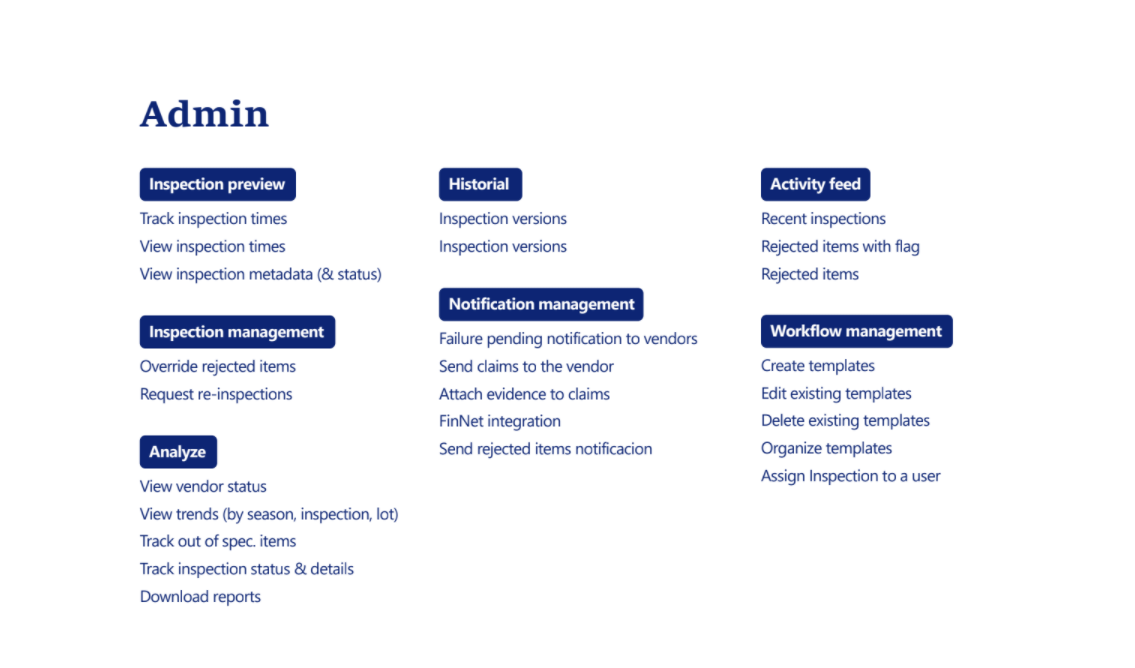
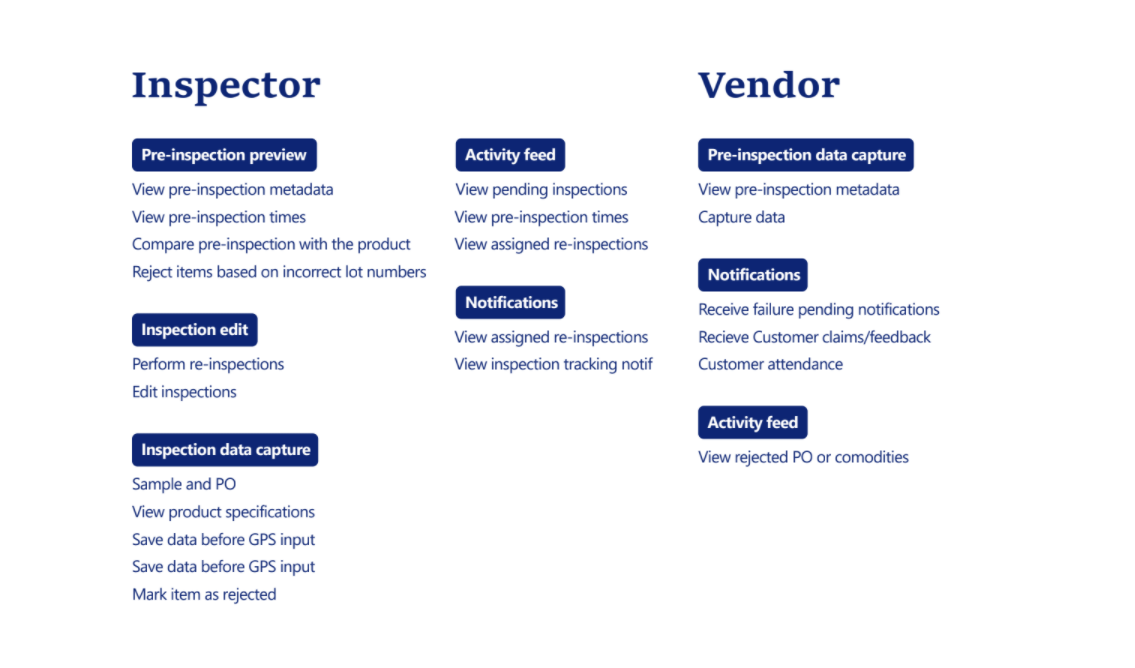
03. Information Architecture
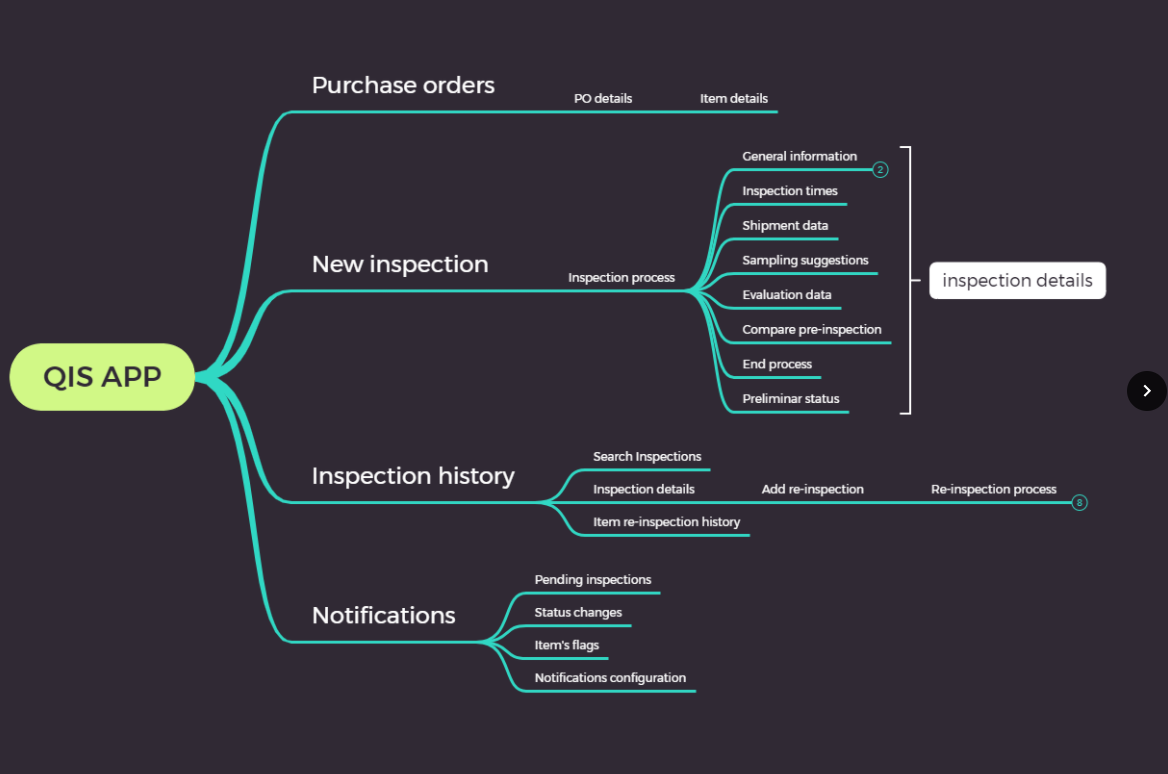
When it comes to creating the structure of a complex application, I use to start from general to particular topics. In this case, it was needed to map down the overall process including the 3 main actors.
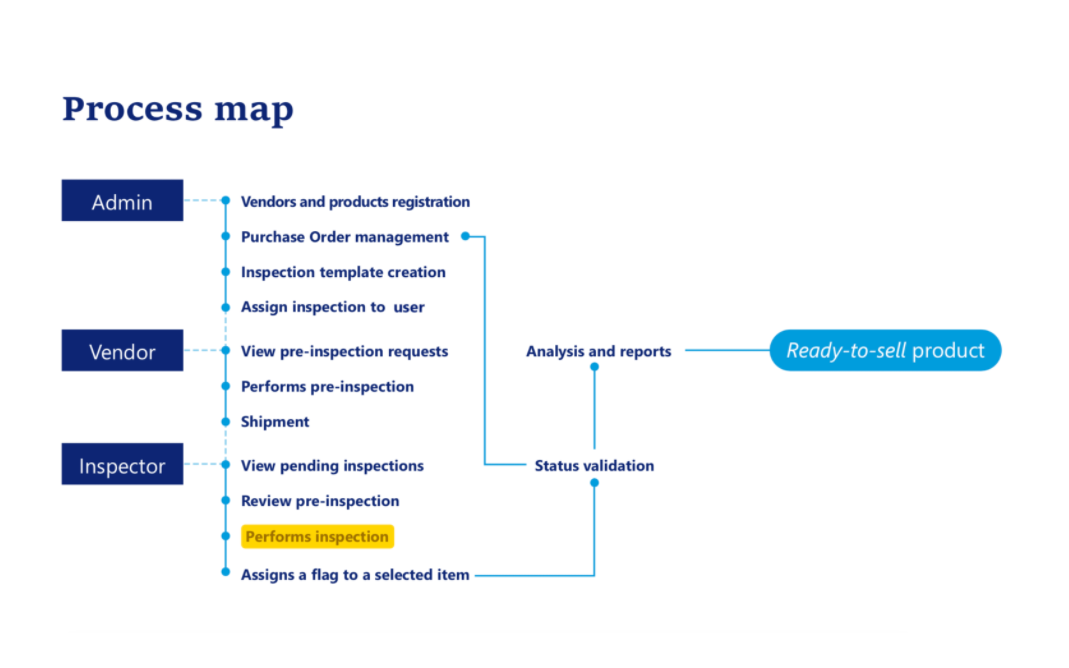
When the general structure was ready, I started to write down the specific metadata needs for each content model, and more IA specifications as sitemaps, flows and wireframes.
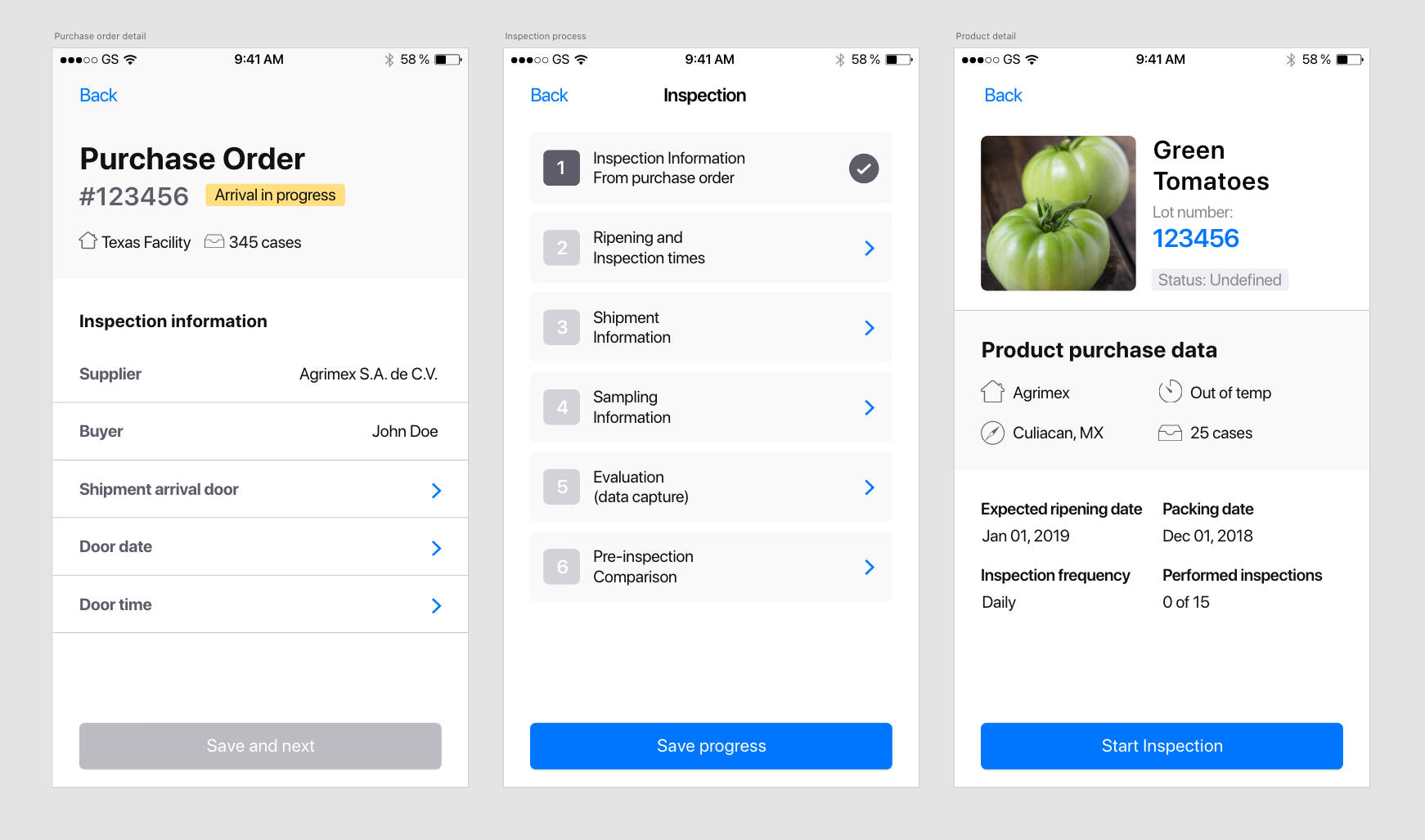
Finally, the development team started to use those wireframes to build the MVP with generic iOS components, so we could be able to measure and adjust while our UI Designers were creating the Design System for the next iterations.